
24 Men's Jewelry Statistics & Data to Know in 2026
Share
Men's jewelry has moved from niche to mainstream, and the numbers show it. The US men's jewelry market reached USD 5.64 billion in 2024 and is on track to hit USD 12.61 billion by 2034, a steady 8.4% annual climb, according to Polaris Market Research. Globally, men's jewelry is growing 7% to 8% a year, almost double the pace of women's jewelry, McKinsey's State of Fashion found. And when men do buy, chains lead the way, with 33% of male jewelry buyers picking necklaces or chains in 2025, per a YouGov survey.
This page pulls together the freshest figures on market size, what men actually buy, how Gen Z men shop, gold demand, and gifting. Every figure below is cited inline to its original source.
Key Men's Jewelry Statistics at a Glance
- The US men's jewelry market was worth USD 5.64 billion in 2024 and is projected to reach USD 12.61 billion by 2034, an 8.4% CAGR (Polaris Market Research, 2025).
- The global men's jewelry market is forecast to grow from USD 48.56 billion in 2024 to USD 124.13 billion by 2034, a 9.9% CAGR (Polaris Market Research, 2025).
- Men's jewelry is growing 7% to 8% a year, compared with 4% to 5% for women's jewelry (McKinsey State of Fashion 2026, 2025).
- Necklaces and chains were the top men's buy at 33%, just ahead of watches at 32% (YouGov, 2025).
- 24% of Gen Z men bought jewelry for themselves in the past year, against 14% of Baby Boomers (YouGov, 2025).
- 78% of American men say men's jewelry is becoming more mainstream (Luke Zion Jewelry, 2024).
- Men spent an average of USD 443 per jewelry purchase and budgeted USD 610 for the year (Luke Zion Jewelry, 2024).
- Rings drew the single largest slice of global men's jewelry revenue, USD 9.72 billion in 2024 (Polaris Market Research, 2025).
- Gold held 59.81% of the global men's jewelry market in 2024 (Polaris Market Research, 2025).
- The value of global gold jewellery demand rose 18% to a record USD 172 billion in 2025 (World Gold Council, 2025).
- Jewelry self-gifts grew 58% since 2021 (McKinsey State of Fashion 2026, 2025).
- 47% of men now shop for jewelry mostly or entirely online (YouGov, 2025).
How big is the men's jewelry market
The category is one of the fastest-growing corners of fashion. In the United States, Polaris Market Research puts the men's jewelry market at USD 5.64 billion in 2024, with a path to USD 12.61 billion by 2034 at an 8.4% compound annual growth rate. The global picture is larger and faster. The same firm sizes the worldwide men's jewelry market at USD 48.56 billion in 2024, projected to nearly triple to USD 124.13 billion by 2034, a 9.9% CAGR.
North America is the heavyweight today, holding 58.15% of the global men's jewelry market in 2024, while Asia Pacific is the quickest-rising region at a 10.2% CAGR, per Polaris. That growth is not happening in isolation. McKinsey's State of Fashion 2026 reports jewelry unit sales are set to rise 4.1% a year between 2025 and 2028, roughly four times the rate of clothing.
What men actually buy
Chains and necklaces sit at the top of the list. In the YouGov survey of 1,000 men, 33% of those who bought jewelry chose necklaces or chains, narrowly beating watches at 32%. Bracelets followed at 24%, fashion rings at 22%, and earrings at 21%. Cufflinks came in at 15% and anklets at 5%.
That ranking maps neatly onto how men describe their own collections. A Luke Zion Jewelry survey of 1,002 American men found the pieces worn most often are watches, wedding rings, chains, bracelets, and non-wedding rings. The average man owns about eight pieces but wears only two or three at a time, which points to room for everyday staples that work in rotation. Classic chain styles carry that load well, from a substantial rope chain to a flat, interlocking Figaro chain.
Rings still pull the most revenue. Polaris reports the ring segment captured USD 9.72 billion globally in 2024, the largest single product share, helped by the cultural weight of wedding and signet rings.
Gen Z men are driving the shift
Younger men are leading the change. The YouGov data shows 24% of Gen Z men bought jewelry for themselves in the past 12 months, compared with 17% of Gen X and Millennials and just 14% of Baby Boomers. The generational gap is one of the clearest signals that self-purchase, not only gifting, is reshaping demand.
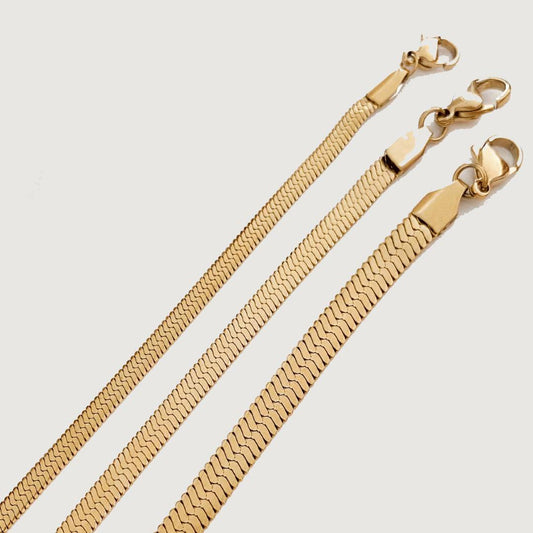
Attitudes back the behavior. In the Luke Zion Jewelry study, 78% of American men said men's jewelry is becoming more mainstream, and nearly three in four planned to buy minimalist pieces, the survey's top trend. Demand for sleek, understated designs favors lighter chains such as a fine snake chain that layers cleanly without overpowering an outfit.
How men shop is changing too. YouGov found 47% of men now buy jewelry mostly or entirely online, and price or discounts (39%) topped the list of purchase drivers, well ahead of brand reputation (20%) and influencer recommendations (8%).
What men spend
Spending is climbing alongside interest. The Luke Zion Jewelry survey found men spent an average of USD 443 per purchase and set aside an average budget of USD 610 for jewelry in 2024. Buyers in the UK skew more modest, with 23% spending GBP 30 or less over the year, though 9% spent more than GBP 1,000, per YouGov.
Material choice shapes those budgets. Gold remains the anchor metal, holding 59.81% of the global men's jewelry market in 2024, Polaris reports, with platinum the fastest-growing metal at a projected 10.0% CAGR. Brand matters more than it used to as well. McKinsey's State of Fashion 2026 found branded jewelry grew 8.3% a year between 2021 and 2024 and now makes up about 25% of the jewelry market, a sign that men are increasingly buying named pieces rather than generic ones.
Who is buying, by age and region
The buyer base is broad but tilting younger. Polaris reports the 30 to 50 age group held the largest share of the global men's jewelry market at 40.25% in 2024, while the 18 to 30 segment is the quickest to expand at a 9.3% CAGR through 2034. That younger cohort lines up with the self-purchase pattern YouGov recorded, where Gen Z men outbought every older generation.
Geography matters too. North America was the largest regional market in 2024 at 58.15% of global men's jewelry sales, with Asia Pacific set to grow fastest at a 10.2% CAGR, per Polaris. For a US audience, that means the category's center of gravity is close to home even as global momentum builds elsewhere.
Gifting and self-gifting
Jewelry has long been a gift, and that still holds, but the lines are blurring. McKinsey reports jewelry self-gifts grew 58% since 2021, with men and women both treating themselves rather than waiting for an occasion. The YouGov figures reinforce the point, since the survey measured men buying jewelry specifically for themselves, not as presents.
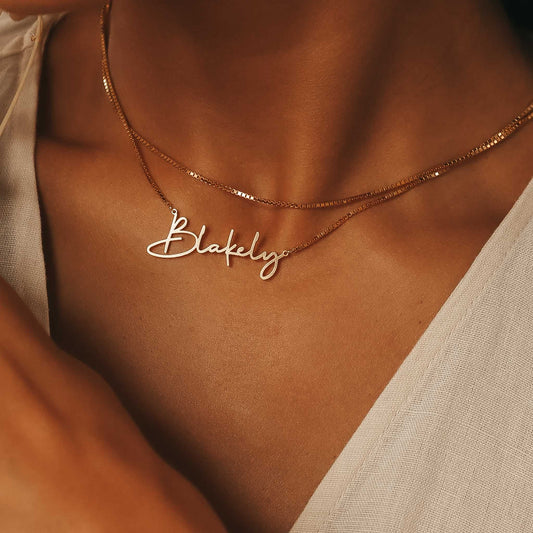
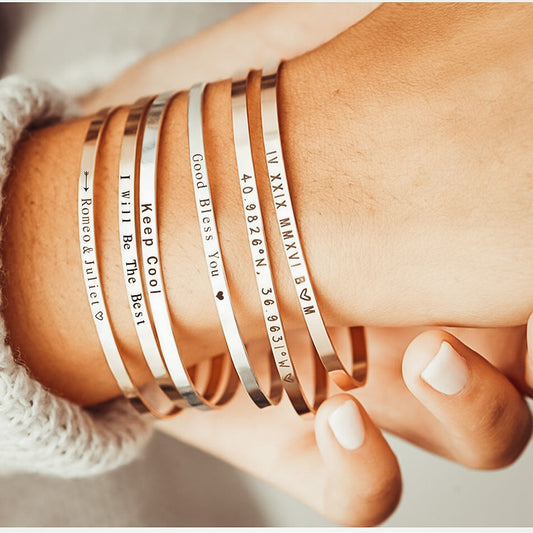
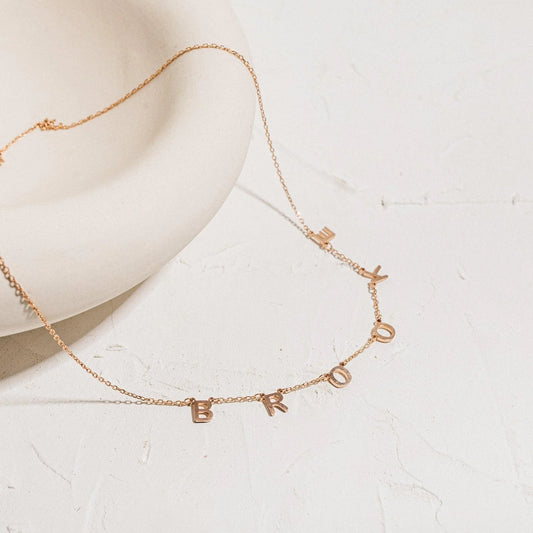
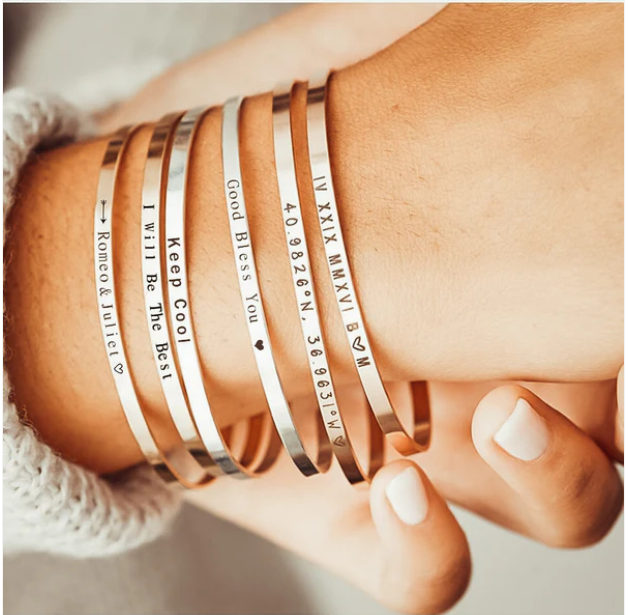
The gifting market still rewards meaning. Pieces that carry a name, an initial, or a symbol tend to land harder, which is why personalized chains and bracelets pair well with the rise in self-expression that survey after survey ties to younger male buyers.
What's New in Men's Jewelry for 2026
Gold's pull goes well beyond the men's segment. The World Gold Council reports the value of global gold jewellery demand jumped 18% to a record USD 172 billion in 2025, a year that saw 53 record-high gold prices. Volume told a different story, falling to a five-year low of 1,542 tonnes, as buyers paid more for less metal and leaned toward lighter pieces.
That spend-up, weight-down pattern lines up with a broader gifting trend. McKinsey found jewelry self-gifts grew 58% since 2021, and branded jewelry expanded 8.3% a year between 2021 and 2024. With men's jewelry growing 7% to 8% annually, close to double the women's rate, the gender gap in growth is one of the defining stories heading into 2026. Personalized and symbolic pieces sit at the center of that demand, which is part of why a stackable charm bracelet reads as both a self-purchase and a meaningful gift.
Where Ora Gift fits
Men's jewelry buyers want everyday staples that last, and chains lead the category. Ora Gift's waterproof, non-tarnish rope chains and other classic styles are built for the daily rotation the data describes, in 14k gold and gold-filled options that hold up to real wear.