18 Jewelry Industry Statistics & Data to Know in 2026
Share
The value of global gold jewelry demand reached US$172 billion in 2025, up 18 percent in a single year even as the volume of metal sold fell. Jewelry is now forecast to be one of fashion's fastest-growing categories, with sales rising 5.3 to 5.6 percent per year through 2028 according to McKinsey. And in the US bridal market, lab-grown stones have crossed a milestone, sitting in 61 percent of engagement rings bought in 2025.
This page pulls together the freshest jewelry industry numbers worth knowing in 2026, covering market size, US consumer spending, the gold price shock, the lab-grown diamond shift, and where growth is heading. Every figure below is cited inline to its original source.
Key Jewelry Industry Statistics at a Glance
- Global gold jewelry demand was worth US$172 billion in 2025, up 18 percent year on year (World Gold Council, 2025).
- US shoppers spent US$13 billion on gold jewelry in 2025, a 28 percent jump (World Gold Council, 2025).
- US consumers spent US$104.6 billion on jewelry and watches in 2024 (US Bureau of Economic Analysis, 2024).
- Jewelry sales are projected to grow 5.3 to 5.6 percent a year through 2028 (McKinsey, 2025).
- Lab-grown stones now sit in 61 percent of US engagement rings, up 239 percent since 2020 (The Knot, 2025).
- The average US engagement ring cost US$4,600 in 2025, down from US$5,200 (The Knot, 2025).
- Average spend on natural diamond jewelry rose 25 percent to US$4,063 in 2025 (De Beers, 2025).
- Non-bridal buying now drives 75 percent of natural diamond demand value (De Beers, 2025).
- Branded fine jewelry is growing at an 8 to 12 percent CAGR, roughly three times the wider market (McKinsey, 2025).
- The gold price averaged US$3,431 an ounce in 2025, 44 percent higher than 2024 (World Gold Council, 2025).
- Online fine jewelry is set to reach 18 to 21 percent of global sales, up from 13 percent (McKinsey, 2025).
- Millennials and Gen Z account for more than three-quarters of diamond sales (De Beers, 2025).
How Big the Jewelry Market Is in 2026
The headline number most people reach for is global jewelry market size, and the cleanest read on it comes from gold. The value of gold jewelry demand hit US$172 billion in 2025, an 18 percent rise on the year, reported by the World Gold Council. That growth is striking because the actual weight of gold jewelry sold fell 18 percent to 1,542.3 tonnes. Buyers paid much more for less metal, a pattern that ran through every major market in 2025.
Looking past gold alone, McKinsey projects the wider jewelry category will grow 5.3 to 5.6 percent per year through 2028, making it one of the fastest-growing parts of fashion. The same analysis pegs branded fine jewelry growth at 8 to 12 percent a year, about three times the pace of the market overall, a sign that named brands and recognizable design are pulling ahead of generic pieces. Shoppers comparing styles often start with dainty everyday jewelry, the segment that maps most closely to this branded, design-led growth.
McKinsey flags a structural shift in how people buy, too. Jewelry is forecast to be the fastest-growing fashion category by unit sales, expanding at more than four times the rate of clothing, helped by slower price increases than apparel and a steady rise in self-gifting among both women and men.
US Jewelry Spending and Consumer Behavior
The US is the single largest jewelry market, and government data shows just how much money moves through it. US consumers spent US$104.6 billion on jewelry and watches in 2024, based on personal consumption figures from the US Bureau of Economic Analysis. That spending sits inside the durable goods category, which tells you something about how buyers think, jewelry is treated as a lasting purchase, not a throwaway one.
Gold spending in particular surged. The World Gold Council reports US gold jewelry spending rose to US$13 billion in 2025, a 28 percent increase, even as the weight of gold bought slipped 11 percent. American shoppers absorbed higher prices and kept buying, often trading down in size rather than dropping out of the market. That instinct toward smaller, finer pieces shows up across necklaces and stackable styles that look refined without the heavy metal weight.
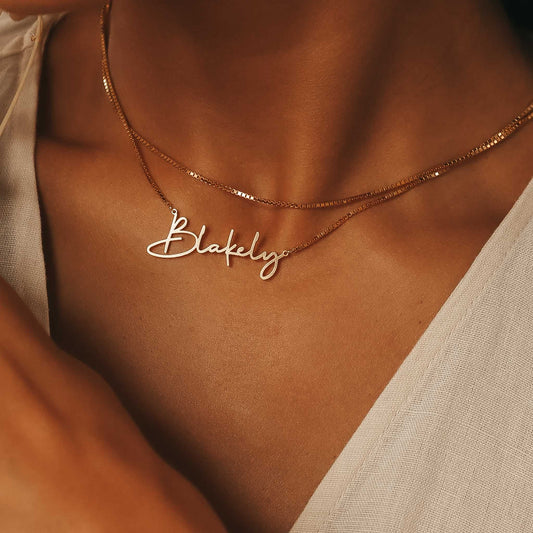
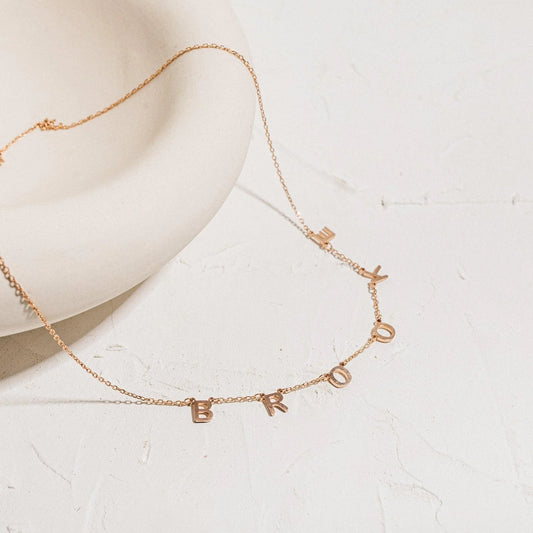
The mix of who buys and why is changing fast. De Beers reports that millennials and Gen Z now make up more than three-quarters of diamond sales. Younger buyers are driving demand for both gifting and self-purchase, and they expect personalized pieces such as name and initial designs that older market data rarely captured.
The Lab-Grown Diamond Shift
No trend has reshaped the jewelry conversation faster than lab-grown diamonds, and the bridal data makes the scale of it clear. Lab-grown stones now sit in 61 percent of US engagement rings, a 239 percent rise since 2020, according to The Knot's 2025 Real Weddings Study of more than 10,000 couples. For the first time, synthetic stones are the majority choice rather than the budget alternative.
That shift has pulled average prices down. The average US engagement ring cost US$4,600 in 2025, down from US$5,200 the year before, as buyers chose larger lab-grown stones (averaging 1.9 carats) at lower cost. Natural diamond rings still command a premium, averaging about US$7,000 against US$4,300 for lab-grown.
Natural diamonds have not stood still. De Beers reports average spend on natural diamond jewelry rose 25 percent to US$4,063 in 2025, with buyers who stay in the natural category trading up on quality. The story is less natural-versus-lab and more a split market, where shoppers pick the stone that fits the occasion and the budget. For everyday sparkle, many skip diamonds entirely in favor of cubic zirconia and gold-finish earrings that deliver the look at a fraction of the cost.
Gold Prices and What They Did to the Industry
The single biggest force on the 2025 jewelry market was the gold price. The metal averaged US$3,431 an ounce in 2025, 44 percent above 2024 and the strongest annual rise in decades, per the World Gold Council. Gold crossed US$4,000 an ounce for the first time in October 2025 and finished the year near US$4,310.
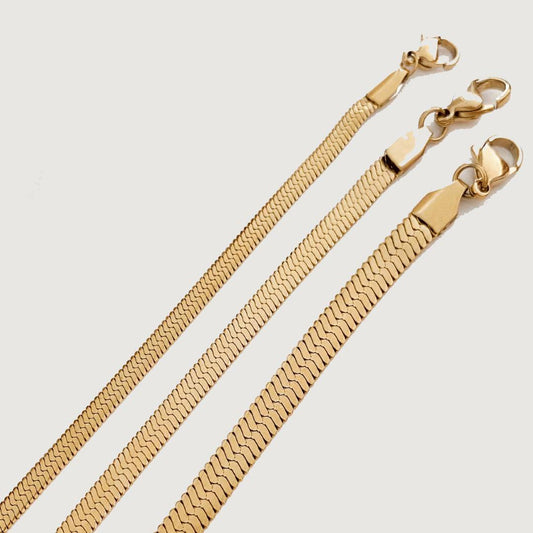
That price shock explains the odd shape of the year. Demand value rose almost everywhere while volume fell, because each gram cost so much more. India still spent US$49 billion on gold jewelry and China spent US$39 billion, both up in dollar terms even as buyers took home less metal by weight. For shoppers, the practical response has been a move toward gold-filled, gold vermeil, and 14k pieces that hold the look without the full bullion cost, the same logic behind affordable gold necklaces that wear like fine jewelry.
What's New in Jewelry for 2026
Three shifts stand out heading into 2026. First, the gap between dollar value and physical volume has become the defining metric of the market. Gold jewelry demand value rose 18 percent globally while tonnage fell 18 percent, per the World Gold Council, so any 2026 headline that reports only one number tells half the story.
Second, non-bridal buying has overtaken bridal as the main driver of diamond value. De Beers reports non-bridal purchases now account for 75 percent of natural diamond demand value, with bridal down to 25 percent. Self-purchase, milestone gifting, and everyday luxury are pulling ahead of the engagement ring as the category's growth engine.
Third, the channel is going digital faster than the market as a whole. McKinsey expects online fine jewelry to reach 18 to 21 percent of global sales, up from 13 percent, as younger buyers grow comfortable spending on jewelry online. Combined with strong self-purchase intent, the 2026 picture is a market that is more digital, more design-led, and less tied to the wedding calendar than it has ever been.
Where Ora Gift Fits
These numbers point to a market that rewards finer, design-led, accessibly priced pieces, exactly the space Ora Gift works in. From dainty gold and silver staples to personalized necklaces made for everyday wear and gifting, the collection lines up with where jewelry demand is actually heading in 2026.