
15 Online Jewelry Sales Statistics & Data to Know in 2026
Online shopping crossed a milestone that reshapes how jewelry gets sold. E-commerce reached 16.9 percent of all US retail sales in the first quarter of 2026, worth $326.7 billion, according to the US Census Bureau. Mobile did most of the lifting last holiday season, when phones drove 56.4 percent of online revenue per Adobe. And jewelry is now the fastest-growing category in fashion by unit sales, set to expand at nearly four times the rate of clothing, according to the McKinsey State of Fashion 2026 report.
This page pulls together the freshest numbers on online jewelry sales, from e-commerce share and mobile buying to direct-to-consumer growth, gold demand, and where the digital channel goes next. Every figure below is cited inline to its original source.
Key Online Jewelry Sales Statistics at a Glance
- E-commerce hit 16.9 percent of US retail sales in Q1 2026, worth $326.7 billion, up 9.8 percent year over year (US Census Bureau, 2026).
- US shoppers spent a record $257.8 billion online over the 2025 holiday season, up 6.8 percent (Adobe, 2026).
- Mobile phones drove 56.4 percent of holiday online revenue, the first full year mobile passed half of online spend (Adobe, 2026).
- Online fine jewelry is projected to climb from 13 percent to between 18 and 21 percent of the global market, worth $60 to $80 billion (McKinsey).
- Jewelry is forecast to be fashion's fastest-growing category by unit sales, growing nearly four times faster than clothing (McKinsey, 2026).
- Branded jewelry grew 8.3 percent a year from 2021 to 2024, almost double the 4.3 percent for unbranded (McKinsey, 2026).
- Self-gift jewelry sales rose 58 percent since 2021 (JCK, 2026).
- The online jewelry market is set to grow by $69.68 billion between 2026 and 2030 at an 18.7 percent CAGR (Technavio, 2025).
- North America accounts for 39.7 percent of that forecast online jewelry growth (Technavio, 2025).
- Total gold demand reached a record $555 billion in 2025, up 45 percent year over year (World Gold Council, 2026).
- Gold jewelry demand fell 18 percent by weight to 1,542.3 tonnes in 2025 as record prices pushed shoppers toward lighter, lower-carat pieces (World Gold Council, 2026).
- Lab-grown diamonds now make up close to 20 percent of global diamond jewelry sales and could reach 50 percent by 2030 (JCK, 2026).

How Big Online Jewelry Sales Have Become
The shift from store counters to screens is no longer a forecast, it is the baseline. E-commerce made up 16.9 percent of all US retail sales in the first quarter of 2026, a total of $326.7 billion, and that figure grew 9.8 percent over the same quarter a year earlier, faster than retail overall (US Census Bureau). The Census Bureau counts mobile, app, and web orders inside that number, so it captures the full sweep of how people buy today.
Jewelry rides that wave from a strong position. Online fine jewelry is projected to move from 13 percent of the global market to between 18 and 21 percent, which works out to roughly $60 to $80 billion in annual online sales, according to McKinsey's Watches and Jewellery research. The same research notes that about 80 percent of fine jewelry is still bought in stores, so the online runway remains long. For a brand selling dainty jewelry built for everyday wear, that gap between current online share and the in-store majority is the whole opportunity.
The dedicated online jewelry market is expanding faster than the category as a whole. It is set to grow by $69.68 billion between 2026 and 2030 at a compound annual rate of 18.7 percent, with North America contributing 39.7 percent of that growth, per Technavio. North American buyers, in other words, are doing more of the digital jewelry shopping than any other region.
Jewelry Is Outgrowing the Rest of Fashion
Most fashion categories are fighting for flat demand. Jewelry is not. It is forecast to be the fastest-growing category in fashion by unit sales, expanding at nearly four times the rate of clothing, according to McKinsey's State of Fashion 2026. Both costume and fine jewelry are set to grow between 5.3 and 5.6 percent a year through 2028, a steady clip that has held even as wider luxury spending cooled.
Branded pieces are pulling ahead of generic ones. Branded jewelry made up 25 percent of the market in 2024 and grew 8.3 percent a year between 2021 and 2024, almost double the 4.3 percent growth of unbranded jewelry (McKinsey). Shoppers increasingly want a name and a story behind what they wear, which favors brands that sell directly online rather than anonymous pieces in a glass case. A clearly branded line of necklaces sold direct-to-consumer fits exactly where the growth is heading.
One driver stands out for online sellers. Self-gift jewelry sales jumped 58 percent since 2021, as more shoppers buy fine pieces for themselves rather than waiting for a gift, according to JCK reporting on the McKinsey findings. Self-gifting is a habit that thrives online, where a quick phone purchase on a Tuesday night needs no occasion and no second person.
Mobile Now Runs the Online Jewelry Checkout
If online is where jewelry sales are going, the phone is the device getting them there. Mobile drove 56.4 percent of all online revenue during the 2025 holiday season, up from 54.5 percent the year before, and 2025 was the first full year mobile passed half of online spend, per Adobe. On Christmas Day mobile share reached 66.5 percent, and on Thanksgiving it crossed 60 percent for the first time at 61.6 percent.
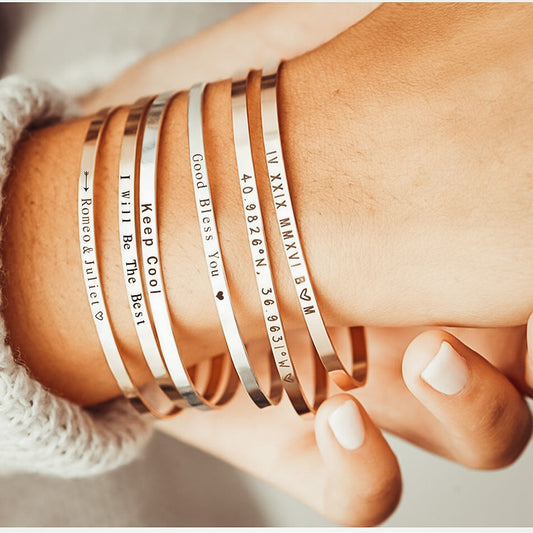
Small, giftable jewelry tracks closely with this mobile-first, impulse-friendly behavior. Adobe's holiday data showed bracelet sales up 335 percent and earring sales up 275 percent against pre-season October levels, two of the sharpest jumps of the season. Lightweight categories like earrings are well suited to the quick, screenshot-and-buy moments that phones create. A jewelry store that loads fast on a phone and checks out in two taps is now playing to where more than half the money already sits.
Personalization and Direct-to-Consumer Are the Edge
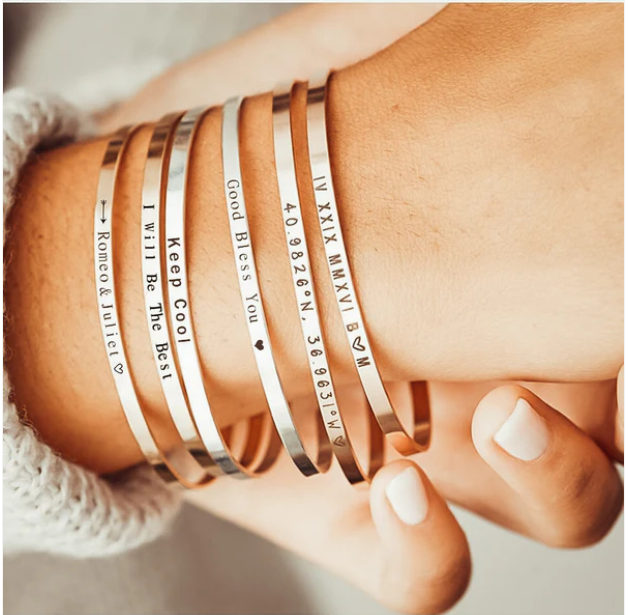
The online jewelry buyer wants something that feels made for them. Self-gifting, branded growth, and the rise of name and initial pieces all point the same way, toward jewelry that carries personal meaning rather than a generic stamp.
Direct-to-consumer brands have the structural advantage here, since they own the customer relationship and can offer customization that a wholesale supply chain cannot match easily. That direct relationship is one useful lens for comparing affordable jewelry brands, especially when personalization, material transparency, and price all matter.
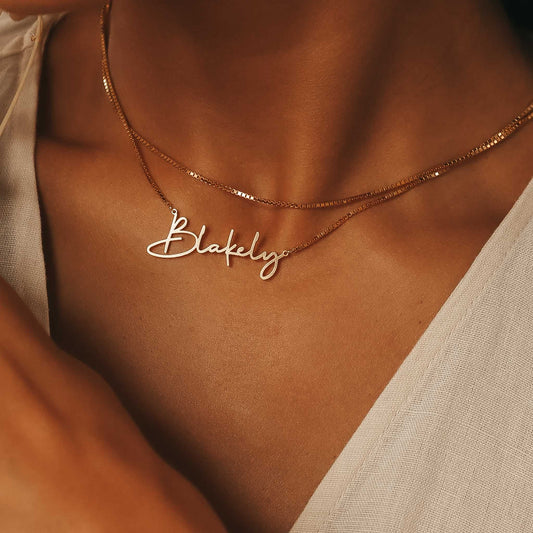
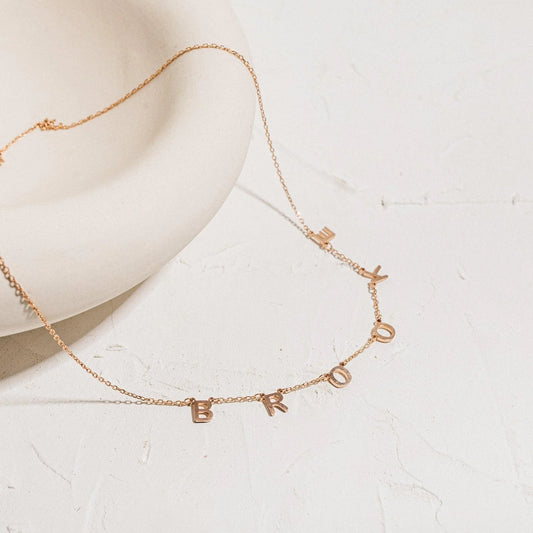
That preference shows up in the branded numbers above, where branded jewelry grew nearly twice as fast as unbranded between 2021 and 2024 (McKinsey). Personalized formats sit at the center of that demand, which is why a line of personalized necklaces with names or initials maps so neatly onto how the category is growing. The piece becomes the brand, and the brand becomes the reason to buy online instead of in a store.
What's New in Online Jewelry Sales for 2026
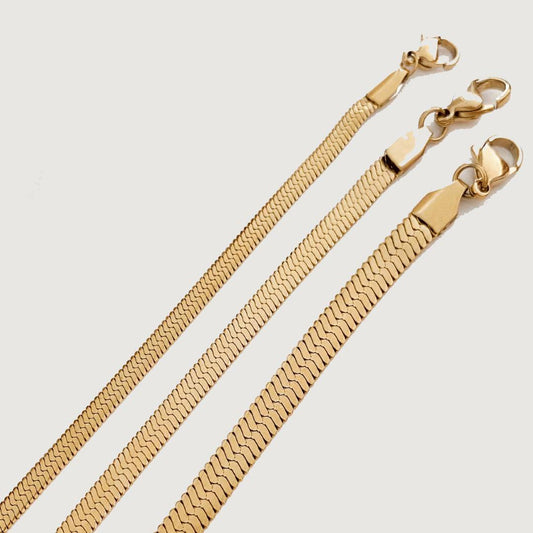
Two forces are redrawing the math for 2026. The first is gold. Total gold demand hit a record $555 billion in 2025, up 45 percent year over year, even as demand by weight slipped, according to the World Gold Council. Jewelry demand fell 18 percent by weight to 1,542.3 tonnes as record prices pushed shoppers toward lighter and lower-carat pieces. For online sellers, that is a clear signal, since dainty, gold-filled, and gold-vermeil designs let buyers wear gold at an accessible price, which is precisely what a gold necklaces range built around delicate weights delivers.
The second force is the lab-grown diamond. Lab-grown stones now account for close to 20 percent of global diamond jewelry sales and could reach 50 percent by 2030, growing about 15.6 percent a year, per JCK. Cheaper, traceable stones lower the price of entry for fine-looking pieces, which feeds the same online, self-gift, everyday-luxury buyer driving the rest of these numbers.
Put the trends together and the picture is consistent. Shopping is moving online, online is moving to mobile, jewelry is outgrowing fashion, and buyers want pieces that feel personal and accessible. Brands built around that profile have the wind behind them.
Where Ora Gift Fits
These numbers describe a buyer who shops on her phone, treats herself without an occasion, and wants gold-toned, personal pieces at a price that makes sense. That is the shopper Ora Gift is built for, with dainty, waterproof, personalized designs made for everyday wear and easy gifting. As online and mobile keep taking share of jewelry sales, a brand designed for that exact moment is positioned to grow with it.