
Best Chain for a Pendant: Types, Lengths, and Weight Pairing

The best chain for a pendant is often a cable or box chain for small to medium pendants because these styles stay visually quiet. A larger or heavier pendant often needs a more substantial rope, wheat, or curb chain, especially for frequent everyday wear. But style names alone do not prove strength.
To decide what type of chain is best for a pendant, clear four hurdles in this order. The chain must fit through the bail, support the pendant, land where you want it, and look balanced with the design. Work through those checks before falling for a particular finish or link pattern.
Quick Answer: Choosing the Best Chain for a Pendant
Got a light pendant? Start with cable or box. Their simple profiles let a tiny initial, solitaire, or delicate charm do the talking.
For a substantial pendant, rope, wheat, and curb chains offer more visual and structural weight. But labels can mislead. Two rope chains may use different metals, link thicknesses, soldering, and solid or hollow construction. Read the maker’s specifications for the exact piece.
Run the fit check first. The clasp or end cap has to clear the bail, the chain has to carry the pendant, and the length has to place it comfortably. Style comes last.
How to Match a Chain to Your Pendant
Let the pendant lead. The best type of chain for a pendant suits its bail opening, size, approximate weight, metal or finish, and expected wear frequency. A delicate everyday charm puts far less stress on its chain than a tall stone pendant that swings against clothing and only comes out for special occasions.
Have a jeweler or the maker confirm the pairing when the pendant is valuable, oddly shaped, or noticeably heavy. One quick check can save a piece you would hate to lose.
Check the Pendant Bail and Clasp Before You Buy
The bail is the pendant’s top loop. Pendant bail size is only the first measurement. Measure its inner opening, then find the widest part that must travel through it. That widest point is often the clasp, jump ring, or end cap rather than the chain itself.
A slim chain can still get stuck at the clasp. Never force it through a tight bail. Once assembled, the pendant should slide and hang without scraping, snagging, or bunching near the hardware. If the fit is close, test the exact pair in person or ask a jeweler about an adapter.
Should You Buy the Pendant and Chain Together?
Buying a complete necklace is the lower-guesswork option when you cannot test bail clearance or confirm support in person. Ora Gift’s Unique Two Coins Personalized Sign Necklace is sold as a 17-inch necklace with 13 mm and 6 mm pendants, so the chain and two charm sizes come as one pairing. You still need to check where 17 inches will land, but you avoid matching separate hardware, proportions, and finishes from scratch.
Match Chain Thickness to Pendant Size and Weight
Wondering what is the best size chain for a pendant? Match the width to the pendant’s scale. Fine chains tend to flatter small, light charms and dainty jewelry. Medium pendants need more presence. Substantial pieces need a chain whose maker has confirmed the load.
Now step back and look. A hair-thin chain can make a large pendant seem precarious even when it is technically suitable. At the other extreme, a chunky chain can swallow a tiny initial and turn a sentimental little detail into background noise. Gently move the necklace and see whether the pendant settles naturally.
Width tells only part of the story. Build changes everything. Metal, soldering, link construction, and clasp quality all shape how much support a chain can offer.
The Best Chain Types for Pendants
Link shape changes the way a pendant moves, sits, and catches the light. If you are asking what is the best type of chain for a pendant, use the table below to build a shortlist. Before buying, confirm the exact chain’s construction and make sure its clasp clears the bail.
|
Chain type |
Best pendant match |
Visual effect |
Watch-out |
|
Cable |
Small initials, charms, and solitaires |
Classic and quiet |
Delicate gauges vary |
|
Box |
Small to medium pendants |
Clean and centered |
Check bail clearance |
|
Rope |
Medium to substantial pendants |
Textured and bright |
Hollow versions differ |
|
Wheat |
Medium to substantial pendants |
Smooth and woven |
Confirm the exact build |
|
Curb |
Medium to larger pendants |
Flat and defined |
Wide links may dominate |
|
Figaro or paperclip |
Style-forward pendants with compatible bails |
Bold and decorative |
Link pattern can limit movement |
Cable and Box Chains for Small and Dainty Pendants
A cable chain is the quiet classic. Its round or oval links sit easily beside initials, small solitaires, and other delicate pendants. The low-key texture plays nicely with dainty everyday necklaces when you want to layer without creating visual clutter.
If you are choosing the best chain for a diamond pendant, a slim box chain creates a crisp line that keeps the focus on the stone. The same clean profile can suit a small personalized piece.
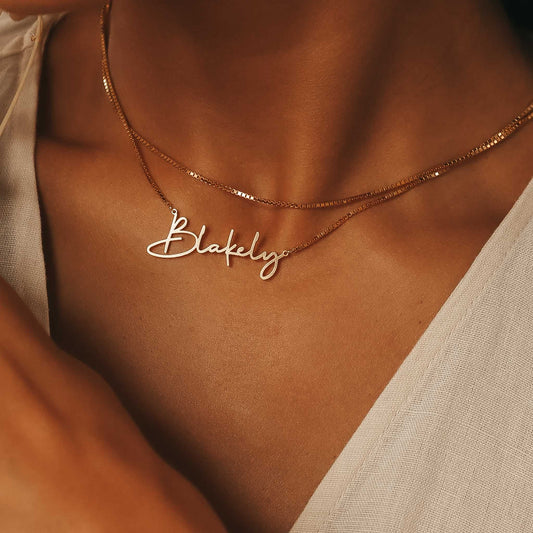
Want less guesswork? Ora Gift’s personalized name necklace comes on a 17-inch box chain attached at both ends of the nameplate. Since the chain is built into the design, the name stays centered instead of sliding around like a removable pendant.
Rope, Wheat, and Curb Chains for Heavier Pendants
Rope, wheat, and curb chains bring more body to the neckline. Rope twists into a bright spiral, wheat feels smooth and woven, and curb links interlock into a flatter line. Their denser profiles can be sensible starting points when a pendant has real size or weight.
The strongest pendant chain is the one whose exact build suits the load. A solid chain with sound soldering and a secure clasp may outlast a much wider hollow chain, no matter what style name appears on the label.
A chain for a large pendant needs enough presence without stealing the scene. View the necklace from normal conversation distance and up close. If your eye lands on the chain first, try a calmer texture or a slightly narrower profile so the pendant gets its moment.
Decorative Chains That Can Compete With or Stress a Pendant
Figaro chains and paperclip chains can carry pendants when the bail moves freely over their patterned links. The exact chain construction must suit the pendant’s weight during normal movement. Their alternating or elongated shapes add plenty of personality. That look works best when the pendant feels like part of the pattern.
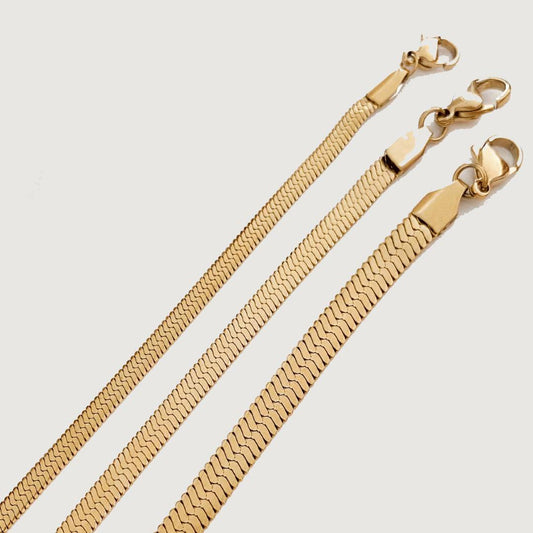
Flat herringbone chains are usually better worn alone because their overlapping structure can twist and kink. The Jewelers of America chain style guide notes that herringbone chains need extra care. Thin box chains pair well with pendants.
Snake chains need a trial run. Many look beautiful with light pendants, yet a snug bail can limit movement and repeated bends may strain the chain. Check how the pendant slides, then watch the drape from the front and side.
How to Choose the Right Chain Length
Pendant necklace length controls the landing spot. Your proportions and the pendant’s own height shift that placement, sometimes by more than expected. Standard lengths serve as useful starting points.
If you are choosing the best chain length for a man with a pendant, start with the 20- to 24-inch range. Gender alone is a weak sizing tool. Neck size, build, pendant scale, and the desired drop give you a much better answer. Measure a necklace that already sits well.
How Does Pendant Height Change Chain Length?
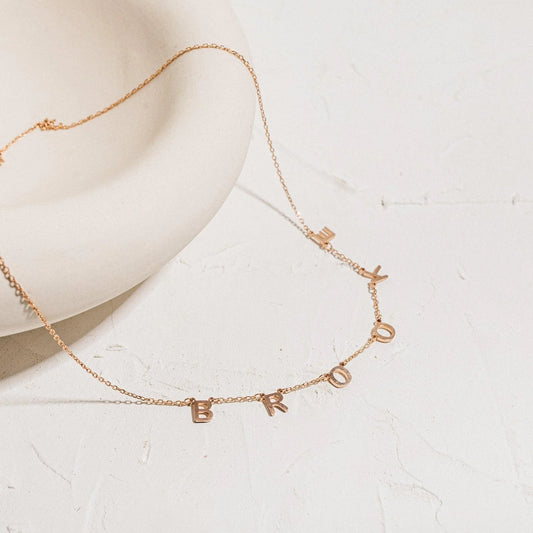
Pendant height changes the final drop, so two necklaces with the same chain length can sit differently. Ora Gift lists its Initial Heart Necklace at 17 inches and its 40 x 5 mm Vertical Bar Necklace at 20 inches. Compare the pendant height and full necklace length, then picture where the bottom edge will land on you.
16 to 18 Inches for Collarbone Placement
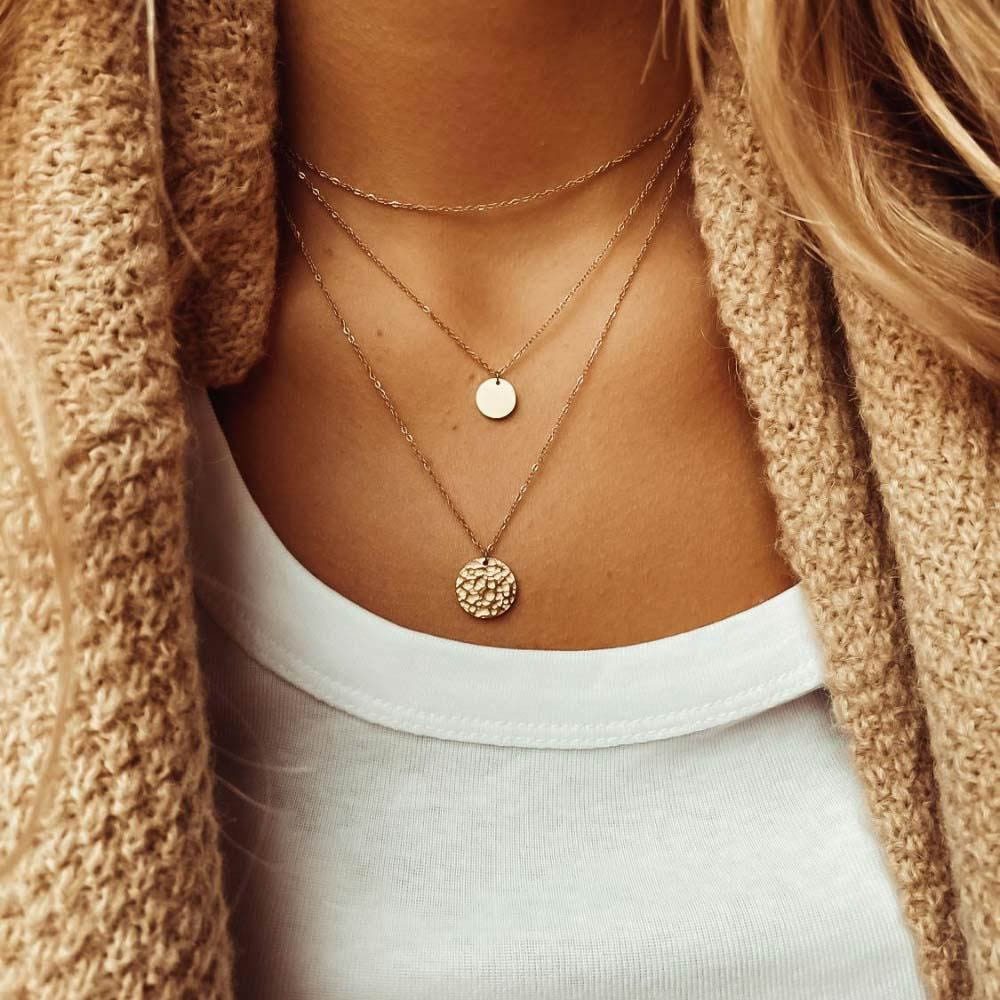
A 16-inch chain sits close to the neck on many people. Add an inch or two, and a pendant often lands around the collarbone, an easy spot for initials, small charms, and personalized pieces. This shorter range keeps a delicate pendant visible above many crew and V necklines.
An adjustable chain or simple extender gives you more room to adjust the fit for different necklines. Check the product details for the included length before ordering.
20 to 24 Inches for Larger Pendants and Layering
At 20 inches, a pendant often falls below the collarbone. A 22- to 24-inch chain creates a lower focal point and gives a larger pendant some breathing room, especially over a high neckline. Count the pendant’s height as part of the final drop.
For a layered gold necklace look, leave space between pendant drops. Two inches is a handy place to begin, but your neck, pendant heights, and chain drape may call for more or less. Try the full stack on and move around before deciding.
Pendant and Chain Weight Pairing Guide
Chain thickness for a pendant is only one factor, so use the pendant’s overall scale to find a sensible starting category. This guide uses qualitative categories because a universal ratio ignores the metal, link construction, and clasp that determine how the real chain behaves.
|
Pendant category |
Starting styles |
Proportion cue |
Confirm before wearing |
|
Light charm or dainty pendant |
Fine cable or box |
Pendant stays the focus |
Bail and clasp pass freely |
|
Medium pendant |
Medium cable, box, wheat, or curb |
Chain looks balanced |
Maker supports the exact weight |
|
Substantial or valuable pendant |
Solid rope, wheat, or curb candidate |
Chain has visible presence |
Load, clasp, and links are confirmed |
When choosing a heavy pendant chain, use the chart as a shortlist, then confirm exact suitability. For a heavy, valuable, or irreplaceable pendant, get written confirmation from the chain maker or let a qualified jeweler inspect the complete pairing.
What Is the Best Gold Chain for a Pendant?
Matching metal colors creates a smooth, uninterrupted look. Mixed metals can feel intentional when the contrast repeats elsewhere, such as a silver pendant on a clean gold chain beside another gold piece.
Material labels describe composition rather than guaranteed strength. Sterling silver, gold-filled, and vermeil use different metal structures, but those labels do not tell you how much weight a particular chain can support. Link design and construction still matter.
When deciding what type of gold chain is best for a pendant, compare options among gold necklaces for women. Check both the color and the exact material description. The word “gold” may describe a finish rather than solid gold. A finish creates the look you want, but chain construction determines suitable pendant support.
Common Pendant and Chain Pairing Mistakes
What width chain is best for a pendant? Width alone cannot answer the question because it leaves out whether the links are solid or hollow, how they were soldered, and whether the clasp feels secure. Read beyond the millimeters.
Clasp clearance is easy to miss. Compare the bail opening with every part that has to pass through it. Once the necklace is assembled, the pendant should glide without scraping or sticking beside the clasp.
Then look at the whole necklace. A tiny charm may disappear on a wide rope chain. A large pendant can make a hair-thin chain look nervous. Lay the pair flat, wear it, and check the view from a few feet away.
Take valuable pieces to a qualified jeweler for repairs. Adapters, soldering, and bail adjustments can change how a necklace hangs or weaken the connection you’re trying to save.
Choose a Chain That Lets the Pendant Mean More
So, what is the best chain for a pendant? It clears the bail, carries the weight, and puts the pendant exactly where you want it. Then it steps back and lets the design lead. Follow that order and the right choice becomes easier to recognize.
A name, initial, or symbol can hold a whole story close to you. That meaning deserves a supporting chain that feels effortless. If you’d rather skip the measuring and matching, explore Ora Gift’s personalized necklaces, where the pendant and chain are already designed as one meaningful piece. It can be made just for you or wrapped for someone you love. For a gift, that removes one more decision without losing the personal touch.
Compare the listed length with a necklace you already love, then choose the name, initial, or symbol that feels most personal.
References
Jewelers of America. “Chain Style Guide.” Jewelers of America.
Jewelers of America. “Necklace Style Guide.” Jewelers of America.